
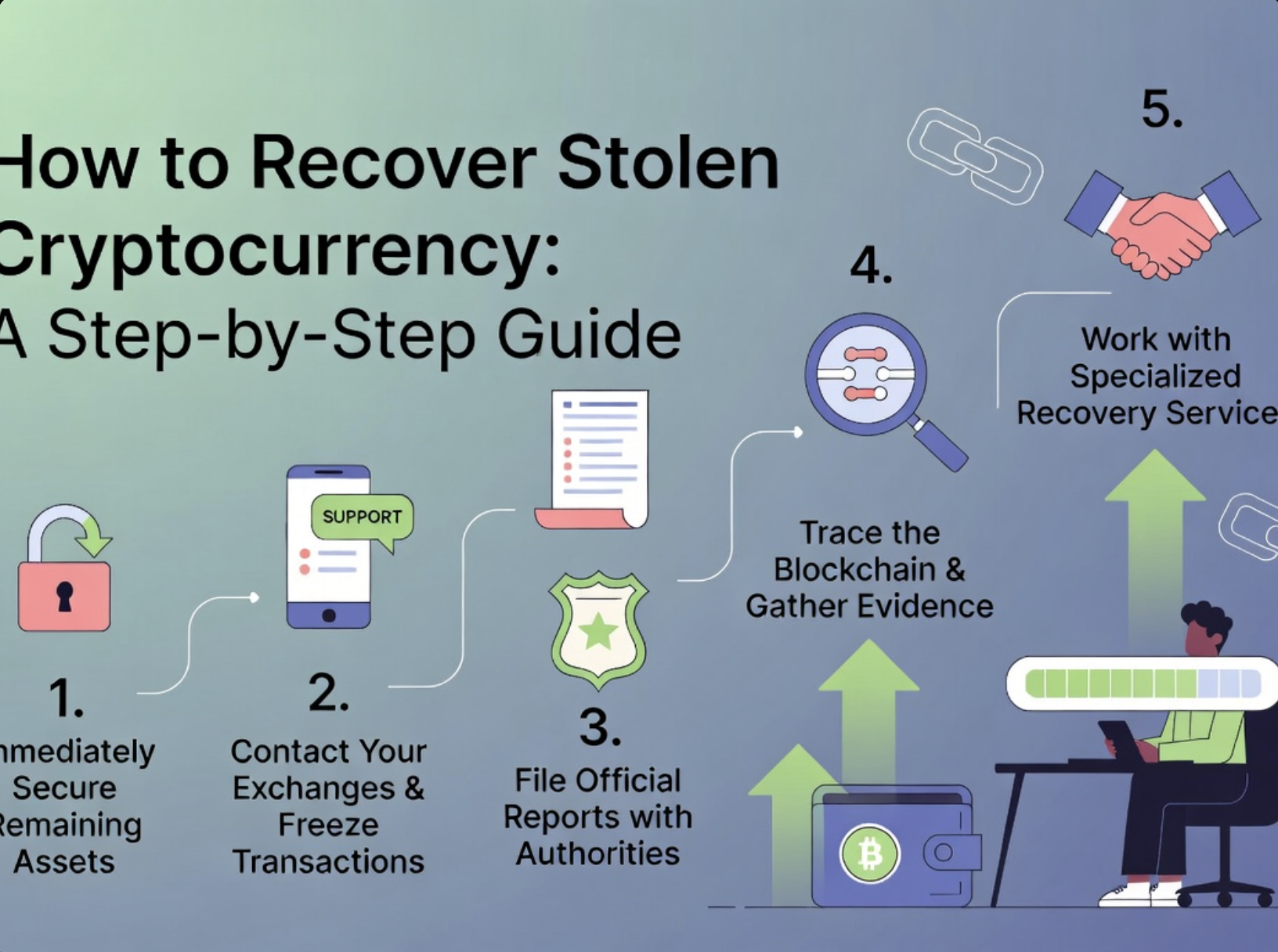
How to Recover Stolen Cryptocurrency: A Step-by-Step Guide
Cryptocurrency scams have become increasingly sophisticated, with thousands of investors losing Bitcoin, Ethereum, USDT, and other digital assets every year. Whether you fell victim to a fake investment platform, a phishing attack, a wallet drainer, or a romance scam, it’s important to act quickly and methodically. While recovering stolen cryptocurrency is often challenging, taking the right steps can improve the chances of identifying where your funds went and supporting any investigation.
This guide explains what to do immediately after discovering the theft and how to protect yourself from further losses.
Step 1: Stop Sending More Money
One of the most common tactics used by scammers is to convince victims that additional payments are needed to release their funds. They may claim you need to pay:
- Taxes
- Withdrawal fees
- Verification charges
- Liquidity fees
- Security deposits
- Account activation fees
Legitimate cryptocurrency platforms generally deduct applicable fees from your account balance rather than requesting additional deposits to unlock withdrawals. If someone is asking you to send more cryptocurrency before you can withdraw your funds, treat it as a serious warning sign.
Step 2: Secure Your Wallets and Accounts
If your wallet or exchange account may have been compromised:
- Change all passwords immediately.
- Enable two-factor authentication (2FA).
- Disconnect suspicious decentralized applications (DApps).
- Revoke unnecessary smart contract permissions.
- Transfer any remaining assets to a newly created wallet if you believe your current wallet is compromised.
Taking these steps quickly can help prevent additional unauthorized transactions.
Step 3: Preserve Every Piece of Evidence
Strong documentation can be valuable if you report the incident to an exchange, law enforcement, or a blockchain investigator. Gather and securely store:
- Wallet addresses
- Transaction IDs (TXIDs)
- Screenshots of your account
- Chat conversations
- Emails
- Phone numbers
- Website URLs
- Payment receipts
- Bank transfer confirmations
- Dates and times of every interaction
Avoid deleting messages or closing accounts until you’ve saved all available information.
Step 4: Trace the Blockchain Transactions
Most cryptocurrencies operate on public blockchains, meaning transactions can often be viewed using blockchain explorers. By reviewing transaction history, you may be able to determine:
- Where the funds were sent
- Whether they were split across multiple wallets
- Whether they were deposited into a known exchange
- Whether they interacted with suspicious wallets previously linked to scams
Blockchain tracing cannot reverse a transaction, but it can help organize evidence and identify patterns that may assist investigations.
Step 5: Contact the Receiving Exchange (If Applicable)
If blockchain records indicate that your cryptocurrency was transferred to a centralized exchange, report the incident to that exchange as soon as possible.
Provide:
- Transaction IDs
- Wallet addresses
- Screenshots
- Timeline of events
- Any supporting documentation
Some exchanges may cooperate with law enforcement when presented with valid requests and sufficient evidence.
Step 6: Report the Scam
Reporting the incident helps authorities identify emerging fraud patterns and may contribute to broader investigations.
Depending on your location, you may report cryptocurrency fraud to relevant consumer protection agencies, financial regulators, or law enforcement. If the scam involved social media or messaging apps, report the fraudulent accounts to those platforms as well.
Even if immediate recovery isn’t possible, reporting the incident helps build records that can assist future enforcement efforts.
Can Stolen Cryptocurrency Actually Be Recovered?
The answer depends on several factors, including:
- How quickly the theft is discovered
- Whether the funds remain traceable
- Whether they pass through a regulated exchange
- Whether law enforcement becomes involved
- The complexity of the laundering methods used
Evidence collected through blockchain analysis may support investigations or legal proceedings in some cases. It’s important to have realistic expectations and avoid anyone promising certain success.
How RadleyAssist.com Can Help
If you’ve been affected by a cryptocurrency scam, RadleyAssist.com can help you understand your options by assisting with blockchain transaction analysis, evidence organization, and guidance on documenting your case. These services are intended to help victims better understand what happened and prepare information that may be useful when reporting the incident to relevant parties.
How to Protect Yourself Going Forward
Reduce your risk of future scams by following these best practices:
- Research every investment platform thoroughly.
- Verify regulatory status where applicable.
- Never share your wallet’s recovery phrase or private keys.
- Avoid unsolicited investment offers on social media.
- Be cautious of guaranteed returns.
- Double-check website URLs before connecting your wallet.
- Use hardware wallets for significant cryptocurrency holdings.
- Enable multi-factor authentication on all crypto accounts.
Final Thoughts
Losing cryptocurrency to a scam can be devastating, but acting quickly can make a significant difference. Preserve your evidence, secure your accounts, report the incident promptly, and remain cautious of anyone promising guaranteed recovery.
If you’re looking for guidance after a cryptocurrency scam, taking informed, well-documented steps is often the best place to start. Staying vigilant and understanding how these scams operate can also help protect you—and others—from becoming victims in the future.