
Recover Crypto From Fake Investment Platform: What Every Victim Should Know
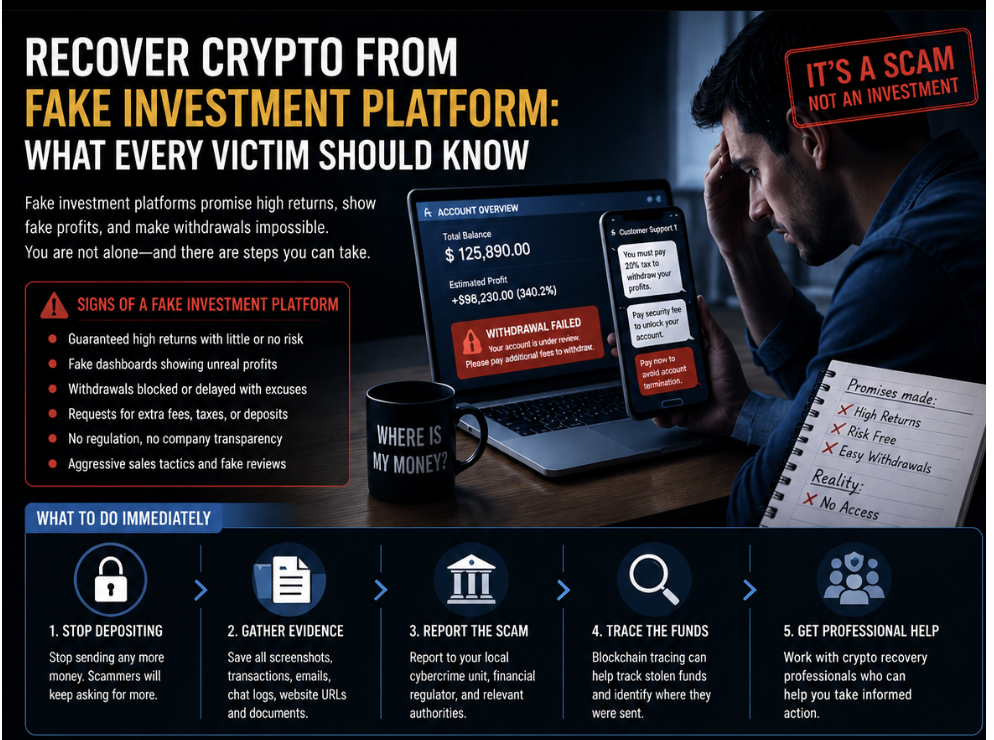
The rise of cryptocurrency has created new investment opportunities, but it has also opened the door for sophisticated fraudsters. Every year, thousands of investors lose millions of dollars to fake cryptocurrency investment platforms that appear professional, promise guaranteed returns, and display convincing account dashboards. Unfortunately, many victims only realize they’ve been scammed when they attempt to withdraw their funds.
If you’re trying to recover crypto from a fake investment platform, it’s important to understand how these scams operate and what steps you can take to preserve evidence and report the fraud. While recovery is not guaranteed, acting quickly can improve the chances of identifying where your funds were sent and help support any investigation.
How Fake Investment Platforms Work
Fraudulent crypto investment platforms are designed to imitate legitimate exchanges or investment firms. They often feature polished websites, fabricated trading charts, fake customer support, and account balances that appear to grow rapidly.
Victims are usually recruited through social media, dating apps, Telegram, WhatsApp groups, or unsolicited messages promising exclusive investment opportunities. Once a victim deposits cryptocurrency, the platform may initially show impressive profits to encourage additional deposits.
However, these profits are typically fictitious. The platform controls what you see on your dashboard, while your cryptocurrency has already been transferred to wallets controlled by the scammers.
Withdrawal Fee Scams
One of the most common tactics used by fake investment platforms is the withdrawal fee scam.
When investors attempt to withdraw their money, they are informed that a fee must be paid before the withdrawal can be processed. These fees may be described as:
- Network fees
- Liquidity fees
- Security deposits
- Wallet activation fees
- Compliance fees
Victims often believe paying the fee will release their funds. Instead, once the payment is made, the scammers invent another reason to request even more money.
Legitimate cryptocurrency exchanges generally deduct transaction fees directly from your account balance rather than requiring separate payments to unlock withdrawals.
Tax Payment Scams
Another widespread tactic is the tax payment scam.
Scammers falsely claim that government regulations require investors to pay taxes before withdrawals can be released. They may even generate fake tax invoices, counterfeit regulatory documents, or forged certificates to appear credible.
In reality, legitimate tax authorities do not require individuals to send tax payments to private investment platforms before accessing their own cryptocurrency.
If a platform insists that you transfer cryptocurrency to pay taxes before releasing your funds, this is a significant warning sign of fraud.
VIP Upgrade Scams
Many fraudulent platforms encourage victims to deposit larger amounts by introducing different membership levels.
After attempting a withdrawal, victims may be told they must purchase a VIP membership or upgrade their account before withdrawals are permitted.
Common examples include:
- VIP Level 2
- Premium Investor
- Institutional Account
- Gold Membership
- Platinum Verification
The scammers promise that upgrading will unlock withdrawals, increase profits, or remove restrictions. Unfortunately, once the victim pays for the upgrade, new excuses are created to delay or deny any withdrawal.
Fake Account Balances
Perhaps the most convincing part of these scams is the fake trading dashboard.
Victims may log in daily and see account balances growing dramatically through supposed trading profits. The platform may display:
- Daily investment returns
- AI-powered trading gains
- Mining rewards
- Referral bonuses
- Interest earnings
These figures often have no connection to real cryptocurrency holdings. Because the scammers control the website, they can display any balance they choose.
Seeing a large account balance can convince victims to invest even more money or persuade friends and family to join the platform.
Pig Butchering Schemes
One of the fastest-growing forms of cryptocurrency fraud is known as pig butchering.
In these scams, criminals spend weeks or even months building trust with victims through dating apps, messaging platforms, or social media. The relationship may appear genuine before investment opportunities are introduced.
Victims are gradually encouraged to deposit increasing amounts into fake investment platforms while seeing fabricated profits.
Eventually, when they attempt to withdraw their funds, the scammers begin demanding additional payments for taxes, verification, or account upgrades. Communication often stops once the victim refuses to send more money.
These schemes are highly organized and frequently involve international criminal networks targeting victims around the world.
Steps to Take If You Lost Crypto
If you believe you’ve sent cryptocurrency to a fraudulent investment platform, consider taking these steps as soon as possible:
- Stop sending additional cryptocurrency, regardless of promises that your funds will be released.
- Secure your remaining wallets and accounts by changing passwords and enabling multi-factor authentication where available.
- Save all evidence, including wallet addresses, transaction IDs, screenshots, emails, and chat conversations.
- Record the website address, company name, and any contact information provided by the platform.
- If the funds were sent through a legitimate cryptocurrency exchange, notify the exchange promptly and provide the relevant transaction details.
- Report the incident to the appropriate law enforcement and financial authorities in your jurisdiction.
Acting quickly may help preserve valuable evidence before fraudulent websites disappear.
Beware of Recovery Scams
After losing cryptocurrency, many victims are approached by individuals claiming they can recover stolen funds for an upfront payment.
These so-called recovery agents often promise guaranteed success, claim to have special access to blockchain systems, or impersonate lawyers, regulators, or investigators.
Be cautious of anyone who:
- Guarantees recovery.
- Demands upfront fees before doing any work.
- Claims they have already located your funds without evidence.
- Contact you unexpectedly after learning about your loss.
- Pressures you to act immediately.
Legitimate professionals should clearly explain their services and avoid making promises they cannot verify.
How RadleyAssist.com May Help
If you’ve been affected by a fake investment platform, RadleyAssist.com provides educational resources for scam victims and information about documenting incidents, organizing evidence, and understanding blockchain transaction tracing. Taking prompt action and preserving accurate records can support investigations and help victims make informed decisions about their next steps.
Final Thoughts
Fake cryptocurrency investment platforms continue to evolve, using convincing websites, fabricated profits, and emotional manipulation to steal digital assets. Whether the scam involves withdrawal fees, fake tax payments, VIP upgrades, inflated account balances, or pig butchering schemes, recognizing these warning signs can help protect both current and future investors.
If you suspect you’ve been targeted, avoid sending additional funds, secure your accounts, preserve all available evidence, and report the incident as soon as possible. Staying informed remains one of the strongest defenses against cryptocurrency investment fraud.